
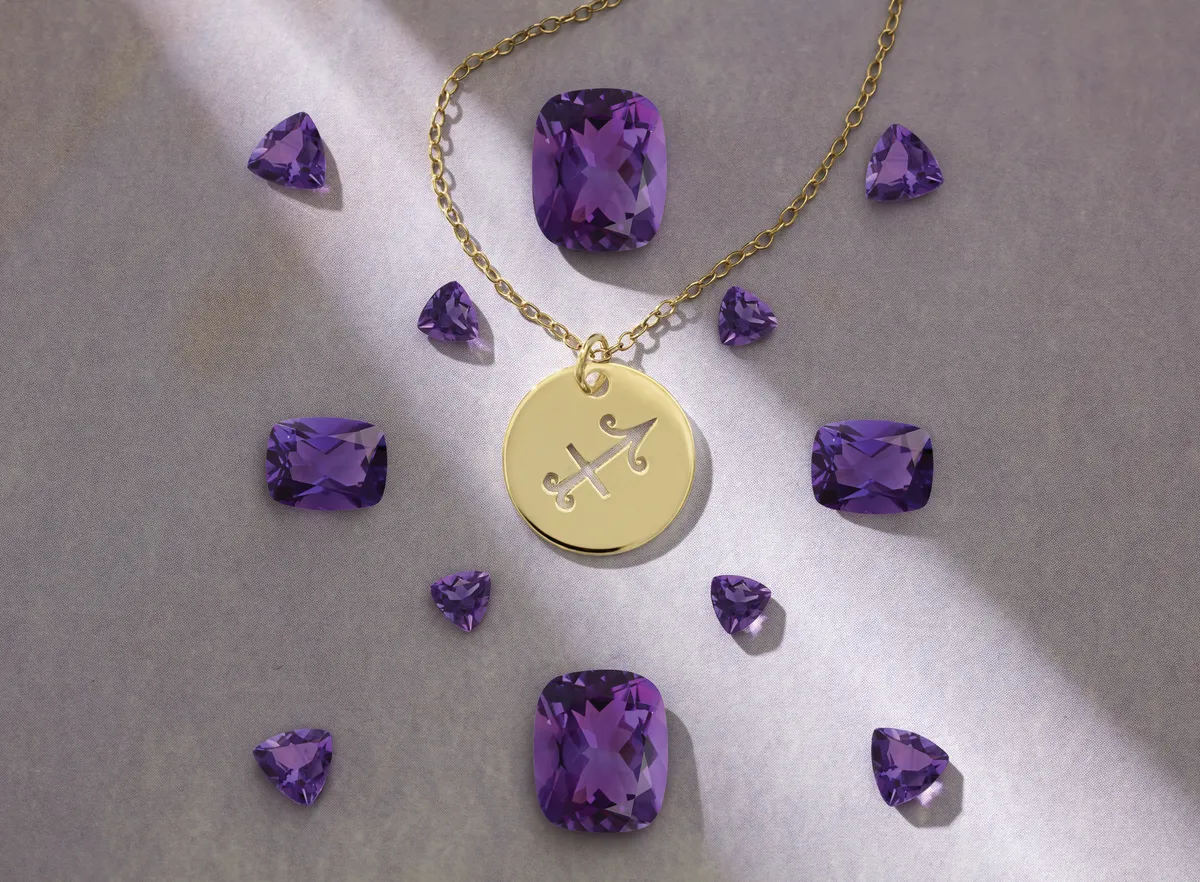
Amethyst: Origin, Quality Factors, and What Makes a Fine Purple Quartz
Amethyst is one of the most recognized colored gemstones in the world—yet fine amethyst is far rarer than people assume. At Geneva Jewelry, we treat amethyst the way gemologists do: not as “just quartz,” but as a gemstone with very real quality tiers defined by geology, color science, cutting performance, and durability.
In this guide, we’ll go deeper than a basic birthstone overview. You’ll learn where amethyst comes from, what gives it its signature color, how professionals evaluate quality, and what to look for when selecting an amethyst for custom jewelry.
What Exactly Is Amethyst?
Amethyst is the purple variety of quartz (silicon dioxide, SiO₂). Quartz is common in the Earth’s crust, but amethyst’s purple color requires a particular set of conditions, so excellent material is not common at all.
Mohs hardness: 7 (durable for everyday wear when correctly set)
Refractive index: ~1.544–1.553
Specific gravity: ~2.65
Crystal system: Trigonal
Typical luster: Vitreous (glass-like)
Quartz is a dependable gemstone for rings, pendants, earrings, and bracelets—especially when the stone is well cut and set with protective design elements.
Amethyst Origins: How Nature Builds It
The geology
Most gem-quality amethyst forms in hydrothermal environments and volcanic cavities—especially in geodes where silica-rich fluids deposit quartz over long periods. Those fluids carry trace elements (notably iron), and the crystal lattice forms in a way that can later produce the purple color we associate with amethyst.
The role of iron + natural irradiation
Amethyst’s color is primarily tied to iron impurities in quartz combined with natural irradiation from surrounding rock over time. That irradiation changes how electrons sit in the crystal structure, creating “color centers” that absorb parts of visible light, leaving us to perceive purple/violet tones.
This is why two amethysts of the same size can look dramatically different: they may share the same mineral species, but the chemistry + radiation history can vary widely.
Major producing regions
Quality amethyst is found in several parts of the world, with different regions known for other “looks”:
Brazil & Uruguay: Often associated with geode material and a wide range of color—from commercial light purple to saturated deep violet.
Zambia: Frequently produces stones that can show deeper, cooler purple with intense saturation.
Bolivia: Known for “ametrine” (amethyst + citrine in one crystal) in certain localities.
Russia (historic): The term “Siberian” is often used in the trade to describe an idealized color style (not always the actual origin).
Important note: Many trade terms are “color descriptors,” not guaranteed origin statements. For high-value stones, documentation and responsible sourcing matter.
The Gemology of Amethyst Quality: What Pros Look For
1) Color: Hue, Tone, Saturation (the big three)
Color is the primary driver of value.
Hue: Purple is the base, but the best stones often show violet and sometimes red flashes (a warmer secondary component).
Tone: How light or dark the stone is. Too light = “washed out.” Too dark = can look inky and lose brilliance.
Saturation: Intensity/purity of color. High saturation gives that “rich velvet” look.
The sweet spot: a vivid purple/violet with intense saturation and a medium-to-medium-dark tone that still stays lively under standard indoor lighting.
2) Clarity: Quartz can be clean—but not always
Many amethysts are eye-clean, but inclusions can appear, including:
“Fingerprint” style healed inclusions
Needle-like inclusions
Zoning or internal growth features
With amethyst, tiny inclusions may not be a deal-breaker if the color is exceptional, but noticeable inclusions that interrupt transparency will reduce value and beauty.
3) Cut: The difference between “fine” and “flat.”
Amethyst is often cut in classic shapes (oval, cushion, emerald cut, pear), but cutting quality varies massively.
A well-cut amethyst will:
Return light evenly (brighter, more “alive”)
Minimize “windowing” (see-through flat area)
Balance brilliance and color depth
Because amethyst can show color zoning, a skilled cutter will orient the rough to present the most even face-up color possible.
4) Carat size: Bigger can be beautiful—if the cut and tone cooperate
Quartz crystals can produce large stones, so size alone doesn’t guarantee value. Larger stones can command premium pricing when they combine:
vivid color
excellent cutting
strong transparency
good proportions (no dead zones)
Treatments: Is Amethyst Natural?
Amethyst is commonly sold as natural quartz, but it can be treated. The most common is heat treatment, often used to transform certain quartz into yellow/orange hues marketed as “citrine.” (A lot of commercial citrine is heated amethyst.)
For amethyst specifically, heat can sometimes lighten or shift color. Reputable sourcing and disclosure matter—especially when you’re buying for a fine jewelry piece intended to last generations.
At Geneva Jewelry, we take sourcing seriously. We look for stones that perform in real-life lighting, show balanced color, and meet the standards we’re willing to stand behind—because the gem is only as good as the piece it’s set into.
Durability & Wearability: Why Setting Design Matters
Amethyst’s hardness (7) makes it suitable for daily wear, but it’s not indestructible. It can chip if struck at the wrong angle—especially at pointed ends (like pears) or at corners (like princess cuts).
Design and craftsmanship make the difference, especially for rings:
Protective prongs or bezels
Halo or shoulder designs that shield the girdle
Proper seat cutting and stone security
Balanced proportions so the stone isn’t “standing proud” and exposed
This is where custom work shines. A thoughtful setting protects the gem and elevates its beauty.
Amethyst Jewelry, Designed and Created In-House at Geneva Jewelry
Amethyst has a unique advantage: it can read luxurious and bold without being overly flashy—especially when paired with the right metal and accent stones.
At Geneva Jewelry, we don’t just sell amethyst—we source it carefully and create amethyst jewelry in-house, designed and crafted by our team. That means:
You can choose your preferred color style (cool violet vs. warmer purple)
We can match stones for earrings or create a perfectly balanced suite
We can design around your lifestyle (low-profile rings, protective settings, heirloom-ready construction)
You get a piece that isn’t “catalog jewelry”—it’s built for you
Whether you want a clean solitaire pendant, a statement cocktail ring, or a refined halo with diamond accents, amethyst rewards craftsmanship. With the right stone and the right design, it becomes a piece you’ll wear for decades.
Quick Buying Tips: What to Ask for When Choosing Amethyst
If you’re shopping for a meaningful amethyst piece, ask:
How does it look in indoor lighting? (Great color should stay rich, not go gray.)
Is the stone evenly colored? (Watch for zoning or pale areas.)
Is there windowing? (Tilt the gem—does it go transparent in the center?)
Is the setting protective enough for daily wear?
Can I see multiple stones side-by-side? (That’s how you spot true quality quickly.)
Create Your Custom Amethyst Piece
If you love amethyst for its color, symbolism, or February birthstone meaning, we’d love to help you select a stone with the right presence and then design a piece that does it justice—from concept to finished jewelry, all handled in-house at Geneva Jewelry.
Amethyst is one of the most recognized colored gemstones in the world—yet fine amethyst is far rarer than people assume. At Geneva Jewelry, we treat amethyst the way gemologists do: not as “just quartz,” but as a gemstone with very real quality tiers defined by geology, color science, cutting performance, and durability.
In this guide, we’ll go deeper than a basic birthstone overview. You’ll learn where amethyst comes from, what gives it its signature color, how professionals evaluate quality, and what to look for when selecting an amethyst for custom jewelry.
What Exactly Is Amethyst?
Amethyst is the purple variety of quartz (silicon dioxide, SiO₂). Quartz is common in the Earth’s crust, but amethyst’s purple color requires a particular set of conditions, so excellent material is not common at all.
Mohs hardness: 7 (durable for everyday wear when correctly set)
Refractive index: ~1.544–1.553
Specific gravity: ~2.65
Crystal system: Trigonal
Typical luster: Vitreous (glass-like)
Quartz is a dependable gemstone for rings, pendants, earrings, and bracelets—especially when the stone is well cut and set with protective design elements.
Amethyst Origins: How Nature Builds It
The geology
Most gem-quality amethyst forms in hydrothermal environments and volcanic cavities—especially in geodes where silica-rich fluids deposit quartz over long periods. Those fluids carry trace elements (notably iron), and the crystal lattice forms in a way that can later produce the purple color we associate with amethyst.
The role of iron + natural irradiation
Amethyst’s color is primarily tied to iron impurities in quartz combined with natural irradiation from surrounding rock over time. That irradiation changes how electrons sit in the crystal structure, creating “color centers” that absorb parts of visible light, leaving us to perceive purple/violet tones.
This is why two amethysts of the same size can look dramatically different: they may share the same mineral species, but the chemistry + radiation history can vary widely.
Major producing regions
Quality amethyst is found in several parts of the world, with different regions known for other “looks”:
Brazil & Uruguay: Often associated with geode material and a wide range of color—from commercial light purple to saturated deep violet.
Zambia: Frequently produces stones that can show deeper, cooler purple with intense saturation.
Bolivia: Known for “ametrine” (amethyst + citrine in one crystal) in certain localities.
Russia (historic): The term “Siberian” is often used in the trade to describe an idealized color style (not always the actual origin).
Important note: Many trade terms are “color descriptors,” not guaranteed origin statements. For high-value stones, documentation and responsible sourcing matter.
The Gemology of Amethyst Quality: What Pros Look For
1) Color: Hue, Tone, Saturation (the big three)
Color is the primary driver of value.
Hue: Purple is the base, but the best stones often show violet and sometimes red flashes (a warmer secondary component).
Tone: How light or dark the stone is. Too light = “washed out.” Too dark = can look inky and lose brilliance.
Saturation: Intensity/purity of color. High saturation gives that “rich velvet” look.
The sweet spot: a vivid purple/violet with intense saturation and a medium-to-medium-dark tone that still stays lively under standard indoor lighting.
2) Clarity: Quartz can be clean—but not always
Many amethysts are eye-clean, but inclusions can appear, including:
“Fingerprint” style healed inclusions
Needle-like inclusions
Zoning or internal growth features
With amethyst, tiny inclusions may not be a deal-breaker if the color is exceptional, but noticeable inclusions that interrupt transparency will reduce value and beauty.
3) Cut: The difference between “fine” and “flat.”
Amethyst is often cut in classic shapes (oval, cushion, emerald cut, pear), but cutting quality varies massively.
A well-cut amethyst will:
Return light evenly (brighter, more “alive”)
Minimize “windowing” (see-through flat area)
Balance brilliance and color depth
Because amethyst can show color zoning, a skilled cutter will orient the rough to present the most even face-up color possible.
4) Carat size: Bigger can be beautiful—if the cut and tone cooperate
Quartz crystals can produce large stones, so size alone doesn’t guarantee value. Larger stones can command premium pricing when they combine:
vivid color
excellent cutting
strong transparency
good proportions (no dead zones)
Treatments: Is Amethyst Natural?
Amethyst is commonly sold as natural quartz, but it can be treated. The most common is heat treatment, often used to transform certain quartz into yellow/orange hues marketed as “citrine.” (A lot of commercial citrine is heated amethyst.)
For amethyst specifically, heat can sometimes lighten or shift color. Reputable sourcing and disclosure matter—especially when you’re buying for a fine jewelry piece intended to last generations.
At Geneva Jewelry, we take sourcing seriously. We look for stones that perform in real-life lighting, show balanced color, and meet the standards we’re willing to stand behind—because the gem is only as good as the piece it’s set into.
Durability & Wearability: Why Setting Design Matters
Amethyst’s hardness (7) makes it suitable for daily wear, but it’s not indestructible. It can chip if struck at the wrong angle—especially at pointed ends (like pears) or at corners (like princess cuts).
Design and craftsmanship make the difference, especially for rings:
Protective prongs or bezels
Halo or shoulder designs that shield the girdle
Proper seat cutting and stone security
Balanced proportions so the stone isn’t “standing proud” and exposed
This is where custom work shines. A thoughtful setting protects the gem and elevates its beauty.
Amethyst Jewelry, Designed and Created In-House at Geneva Jewelry
Amethyst has a unique advantage: it can read luxurious and bold without being overly flashy—especially when paired with the right metal and accent stones.
At Geneva Jewelry, we don’t just sell amethyst—we source it carefully and create amethyst jewelry in-house, designed and crafted by our team. That means:
You can choose your preferred color style (cool violet vs. warmer purple)
We can match stones for earrings or create a perfectly balanced suite
We can design around your lifestyle (low-profile rings, protective settings, heirloom-ready construction)
You get a piece that isn’t “catalog jewelry”—it’s built for you
Whether you want a clean solitaire pendant, a statement cocktail ring, or a refined halo with diamond accents, amethyst rewards craftsmanship. With the right stone and the right design, it becomes a piece you’ll wear for decades.
Quick Buying Tips: What to Ask for When Choosing Amethyst
If you’re shopping for a meaningful amethyst piece, ask:
How does it look in indoor lighting? (Great color should stay rich, not go gray.)
Is the stone evenly colored? (Watch for zoning or pale areas.)
Is there windowing? (Tilt the gem—does it go transparent in the center?)
Is the setting protective enough for daily wear?
Can I see multiple stones side-by-side? (That’s how you spot true quality quickly.)
Create Your Custom Amethyst Piece
If you love amethyst for its color, symbolism, or February birthstone meaning, we’d love to help you select a stone with the right presence and then design a piece that does it justice—from concept to finished jewelry, all handled in-house at Geneva Jewelry.